The Diploma Programme (DP) was established in the 1960s and is a highly respected qualification that has prepared students for the rigours of university life for over 50 years. Today, it provides a well-established and globally renowned education for students aged 16–19, offering a valuable alternative to traditional A Level programmes.
According to the latest statistics published by IBO (5 December 2017), there are 6,395 programmes offered worldwide across 4,783 IB schools.
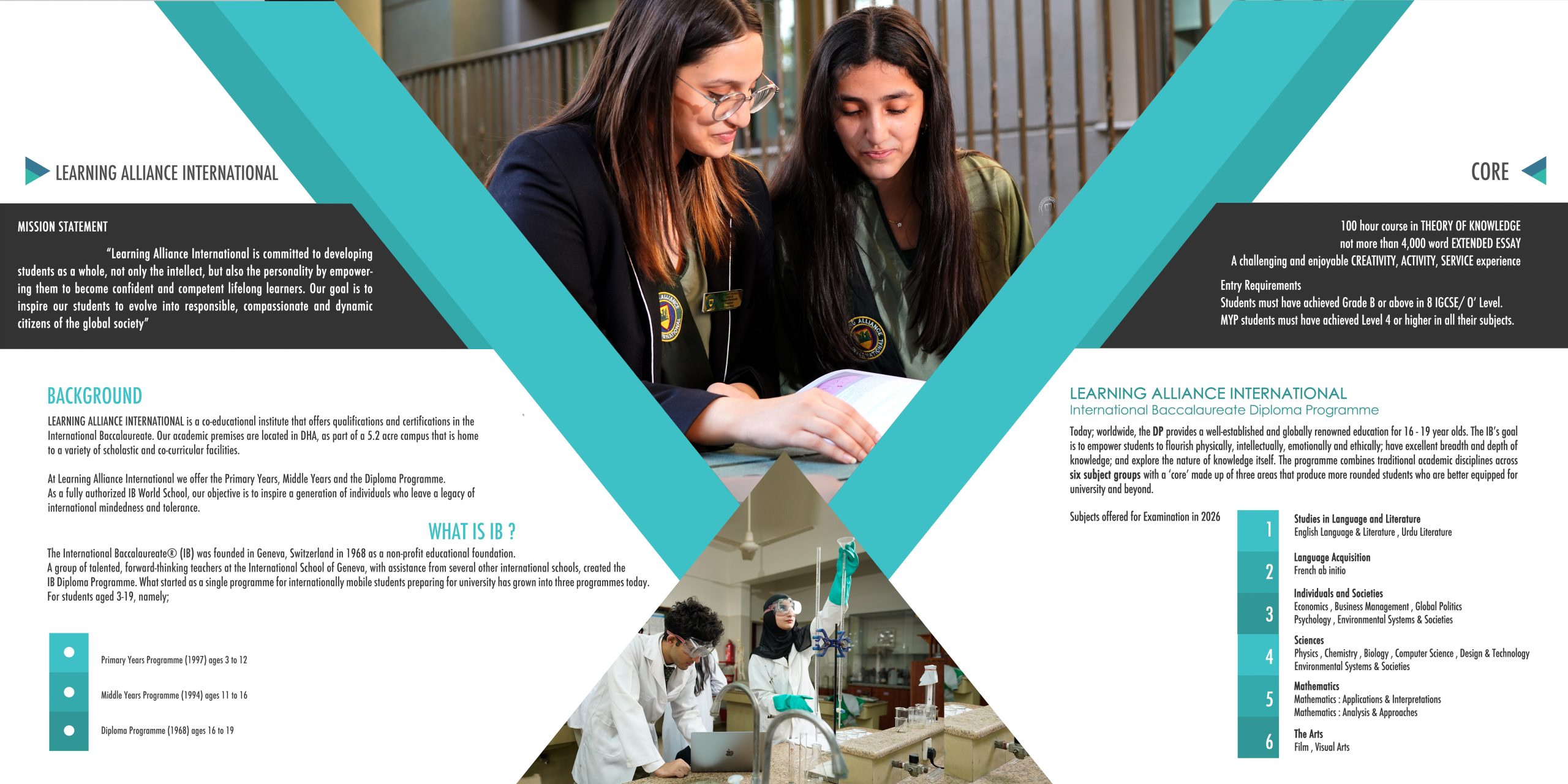
The IB’s goal is to empower students to flourish physically, intellectually, emotionally, and ethically — developing excellent breadth and depth of knowledge, while exploring the nature of knowledge itself. The programme combines six subject groups with a core that prepares students for success at university and beyond.
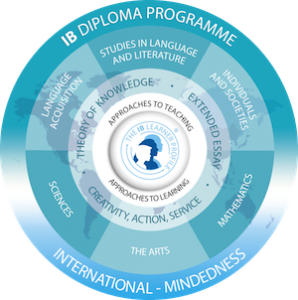
Subjects Offered for Examination (2020)
| Group 1 | Group 2 | Group 3 | Group 4 | Group 5 | Group 6 |
|---|---|---|---|---|---|
| Studies in Language and Literature | Language Acquisition | Individuals and Societies | Sciences | Mathematics | The Arts |
| English A: Language & Literature, Urdu A: Literature |
French ab initio | Business Management, Psychology, Global Politics, Economics | Environmental Systems & Societies, Computer Science, Design & Technology, Physics, Biology |
Mathematics: Interpretations & Applications, Mathematics: Analysis & Approaches |
Visual Arts |
Why Choose the DP?
- Students experience a rigorous course of study across six disciplines, allowing deep exploration and career-oriented focus.
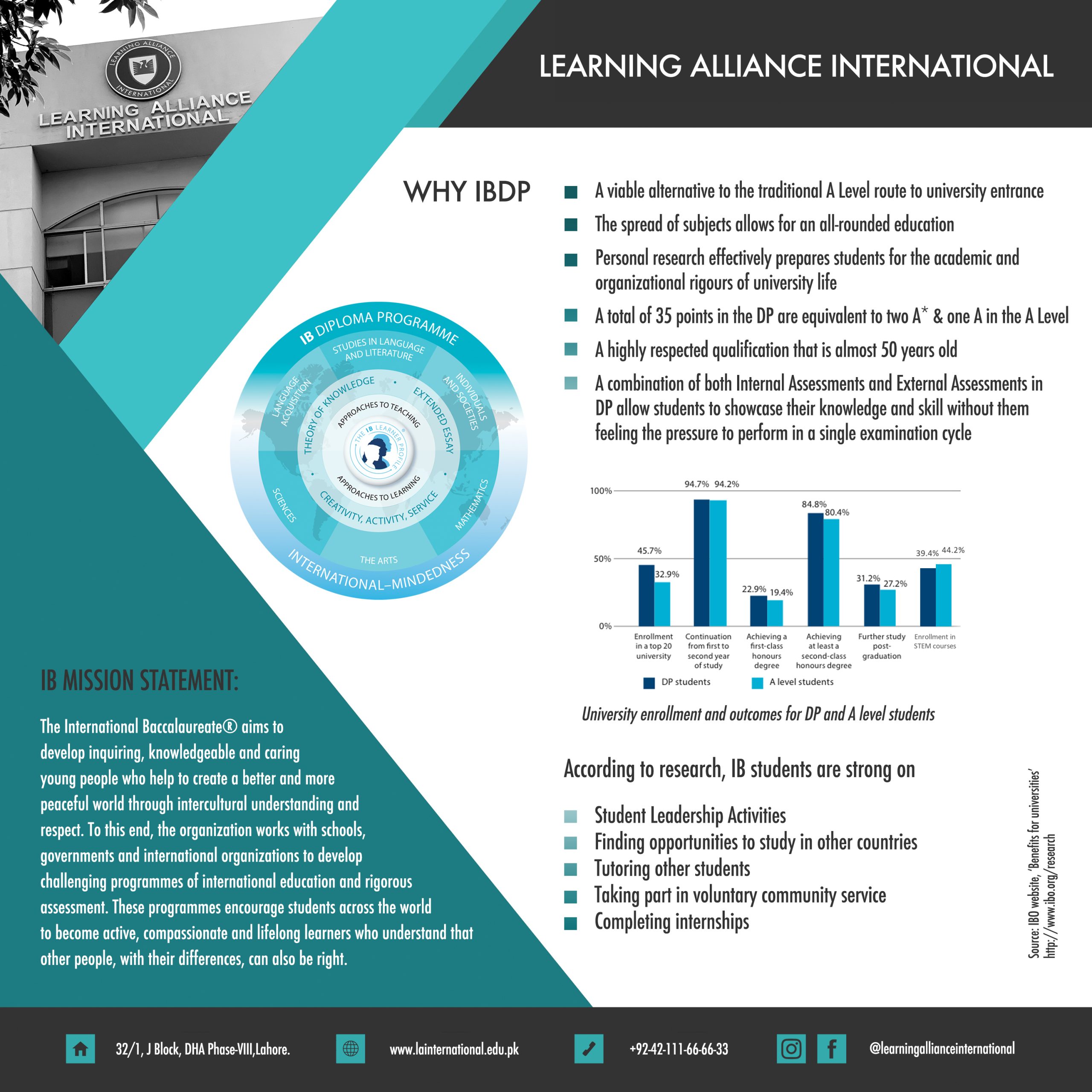
- Achieving 35 points in the DP is equivalent to two A* and one A grades at A Level.
- Internal and external assessments enable balanced evaluation, reducing pressure from single-cycle exams.
According to the IBO website, “Benefits for Universities,” DP students excel in:
- Student leadership activities
- Opportunities to study abroad
- Tutoring and mentoring peers
- Community service and volunteering
- Internships and practical learning experiences
Source: IBO website, “Benefits for Universities”